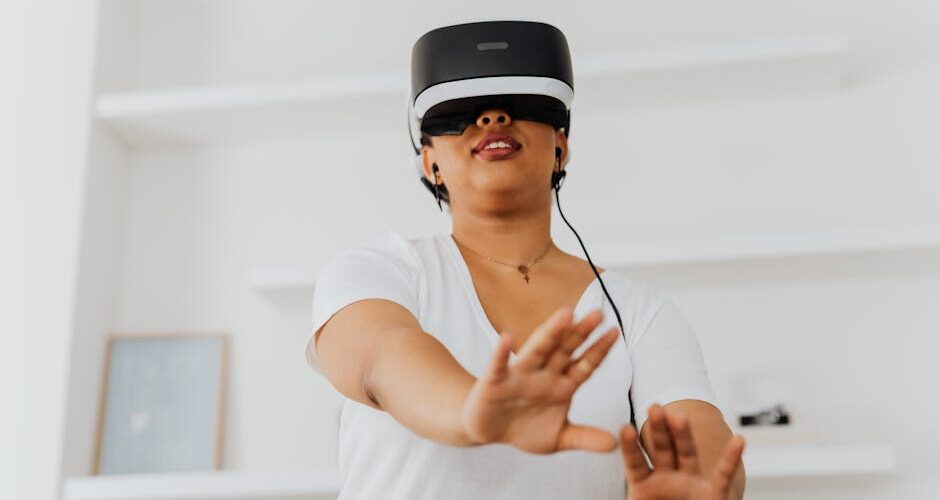
The Evolution of Augmented Reality: Trends for 2026
As we stand on the cusp of technological innovation in 2026, augmented reality (AR) is transforming the way we interact with the world around us. It’s no longer confined to the realms of gaming or novelty apps. Instead, AR is embedding itself into everyday life, from education to retail, healthcare to entertainment. Let’s take a closer look at how augmented reality has evolved and what trends are shaping its future today.
The Blurring of Real and Virtual Worlds
One of the most fascinating developments in AR is the seamless integration of virtual elements into the physical environment. Thanks to advancements in spatial computing, AR devices are now capable of rendering digital objects with unprecedented realism. Companies like SpatialLabs in San Francisco are leading the charge, creating platforms where digital and physical worlds coalesce in real time. These platforms allow users to manipulate virtual objects as if they were tangible, transforming how we design spaces, hold meetings, or even create art.
The Rise of Augmented Reality in Education
Education has always been a fertile ground for technological innovation, and AR is no exception. In 2026, classrooms around the globe are leveraging AR to enhance learning experiences. Take, for instance, the AR applications used in the University of Cambridge, where students can explore 3D models of historical artifacts or human anatomy, providing a more immersive and interactive approach to learning. This trend doesn’t stop at universities. Primary and secondary schools in places like Tokyo and Berlin are incorporating AR into their curriculums, making learning more engaging for students of all ages.
Retail Revolution: Try-It-On Virtually
Shopping has never been more convenient or immersive, thanks to augmented reality. Retailers are utilizing AR to create virtual changing rooms where customers can try on clothing or makeup without stepping foot in a physical store. Zara’s flagship store in New York City is a prime example, offering a virtual shopping assistant that allows customers to see how outfits look and fit in a mirror-like display before committing to buy. This has not only enhanced customer satisfaction but also reduced return rates significantly.
Healthcare: Precision and Virtual Training
The healthcare industry is harnessing AR to improve patient outcomes and medical training. Surgeons in hospitals such as the Cleveland Clinic are using AR to overlay MRI and CT scan images onto patients during surgery, providing them with real-time data without diverting their attention from the task at hand. Additionally, medical students are benefiting from AR simulations that allow them to practice complex procedures in a risk-free, controlled environment. This ability to merge digital precision with human skill is revolutionizing medical education and practice.
AR in Entertainment: A New Dimension of Interaction
The entertainment industry has been quick to adopt AR, providing audiences with interactive and immersive experiences. Theme parks like Disneyland Paris have introduced AR-enhanced rides and attractions, allowing visitors to interact with their favorite characters and stories in entirely new ways. Movie studios are also experimenting with AR to create immersive movie experiences where audiences can influence storylines or interact with characters through their smartphones or AR headsets.
Practical Takeaway: Embrace the Augmented Future
With AR technology becoming more accessible and sophisticated, its potential applications are expanding rapidly. Businesses, educators, and professionals across industries should consider integrating AR into their operations to enhance customer experiences, improve learning outcomes, and streamline processes. As this technology continues to mature, those who embrace it early will likely find themselves at the forefront of innovation in their respective fields.